LeStallion Writing Journals: The Productivity Tool That Actually Works
For years, I chased productivity through apps, timers, and digital planners. Each new tool promised to organize my chaos, yet I always ended up back where I started, staring at a blinking cursor or a half-filled to-do list. It wasn't until I returned to pen and paper that something clicked. But not just any notebook. I discovered that the physical journal itself matters far more than I expected. That is where LeStallion writing journals come in.
I first picked up a LeStallion writing journal on a whim, after reading a forum post about how paper forces a slower, more deliberate thought process. The post argued that the friction of writing by hand filters out shallow ideas and leaves room for the ones worth pursuing. I was skeptical, but within a week I noticed a measurable shift in my workflow. My daily planning became less about listing tasks and more about choosing the right ones.
Why a Physical Journal Beats Digital Tools
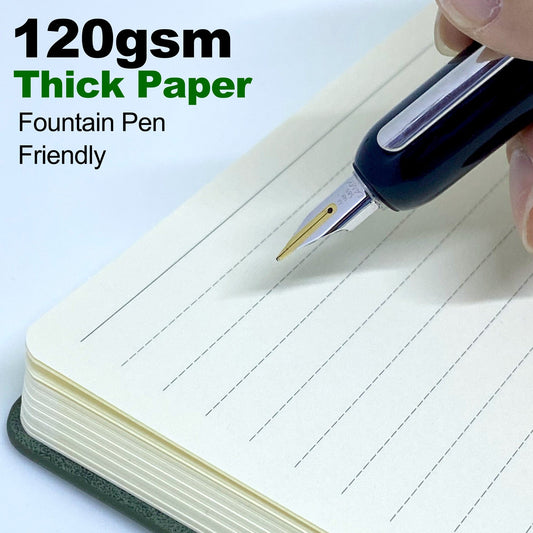
Digital tools are fast, but speed often works against depth. When I type a note, it feels temporary, easy to delete or revise. Writing by hand, especially on high-quality paper, makes each mark feel permanent. That permanence forces a higher standard for what deserves to be written down. LeStallion writing journals are designed with this principle in mind. The paper weight is substantial, the binding lies flat, and the pages hold ink without bleeding. These details may sound minor, but they change how you treat the act of writing.
In my own experience, the tactile feedback from a good pen gliding across smooth paper creates a rhythm that helps me think clearly. I have tried cheaper notebooks and the difference is tangible. Thin paper that feathers with fountain pens, or spiral bindings that catch on your sleeve, break the flow. A journal that feels good in the hand encourages you to use it more often, and consistency is what turns a habit into a productive system.
Practical Ways I Use a LeStallion Writing Journal
I keep one journal for daily planning and a separate one for long-form thinking. The planning journal uses a simple layout: a page per day with a morning review and an evening reflection. In the morning I write down three priorities for the day, not the entire task list. This forces me to choose what is actually important. In the evening I note what worked and what did not, often in just a few sentences. Over time, these small entries reveal patterns in my productivity that I would never spot in a digital calendar.

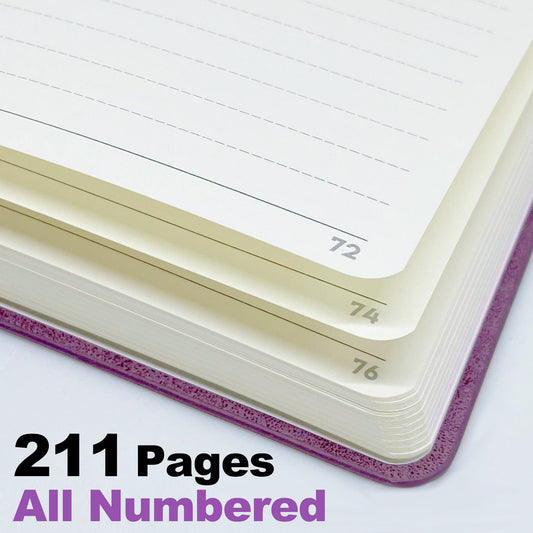
The long-form journal is where I explore ideas that are not yet fully formed. I might write about a project I am stuck on, or a concept I want to understand better. The act of writing out a problem often reveals a solution I had not considered. I find that the structured format of a LeStallion writing journal, with its subtle page numbers and a discreet index, helps me revisit old notes and connect ideas across weeks. Without that structure, my ideas would remain scattered fragments.
What to Look For in a Productivity Journal
Not all notebooks are equal when it comes to productivity. Here are the features that matter most to me, based on my experience with several brands.
- Paper quality: Thick, smooth paper that can handle fountain pens and rollerballs without ghosting or bleeding.
- Binding: Lay-flat binding so the journal stays open on a desk without holding it down.
- Page layout: A dot grid or a subtle ruled line helps keep writing aligned without being restrictive.
- Durability: A cover that withstands being tossed into a bag and pulled out for weeks on end.
- Numbered pages and an index: These make it easy to find past entries and build a reference system over time.
LeStallion writing journals check every one of these boxes. The paper is 100 gsm, which handles ink beautifully. The binding is sewn and lies completely flat. The dot grid is faint enough to disappear when you write, but present enough to guide your hand. I have carried mine for three months and the cover shows only minor wear, which is exactly what I want from a tool I use daily.
How a Journal Changes Your Relationship With Time
One of the hardest parts of productivity is not managing tasks, but managing attention. A journal creates a deliberate pause in your day. When I open mine in the morning, I am signaling to my brain that the next few minutes are for reflection, not reaction. That pause alone has reduced my tendency to start the day by checking email or social media, which used to hijack my focus before I had even set an intention.
I also use my journal to track time estimates. I write down how long I expect a task to take, then later record how long it actually took. This practice, which I borrowed from a friend who is a project manager, has revealed that I consistently underestimate tasks by about 30 percent. Without the journal, I would have kept that blind spot. The physical act of writing down both numbers makes the discrepancy harder to ignore than a digital timer would.
Common Mistakes When Starting a Journaling Habit
I made several errors before I found a rhythm that stuck. You might benefit from avoiding them.
- Buying a journal that is too fancy or expensive to write in freely. You need a journal you are not afraid to fill with imperfect notes.
- Setting an unrealistic goal like writing three pages every day. Start with five minutes or a single sentence.
- Using the journal only for tasks and never for reflection. The real value comes from reviewing what you did, not just listing what you plan to do.
- Switching systems too often. Stick with one format for at least a month before deciding it does not work.
- Ignoring the physical experience. If the paper feels bad or the pen skips, you will stop using it. Invest in a journal that feels good to touch.
LeStallion writing journals avoid the first mistake because they are priced reasonably for the quality. They feel premium without being precious. I can write a messy brainstorm in mine without worrying about wasting pages. That freedom is essential for the kind of raw thinking that leads to real breakthroughs.
Beyond Planning: Creative and Professional Uses
Productivity is not limited to task management. I have used my journal for project brainstorming, meeting notes, and even sketching out simple diagrams for software architecture. The dot grid makes it easy to draw boxes and arrows, which helps me think through system designs more clearly than a blank page would. A colleague of mine uses his LeStallion writing journal for client meetings. He says the professional look of the journal helps him appear more prepared, and the numbered pages let him reference notes from previous meetings quickly.
Another friend keeps a reading journal in her LeStallion. She writes a short summary of every book she finishes, along with a few ideas she wants to apply. She told me that this habit has doubled her retention of nonfiction books. I tried it myself and found that summarizing a chapter in my own words forces me to understand it well enough to explain it, which is far more effective than highlighting passages.
Is a Physical Journal Right for You?
If you already feel overwhelmed by notifications and screen time, a physical journal offers a rare space of quiet. It does not buzz, ping, or tempt you with a browser tab. The only thing it asks is that you show up and write. For me, that simplicity is the core of its power. I have tried going back to digital tools a few times, but I always return to paper within a week. The act of writing by hand engages my brain in a way that typing does not.
LeStallion writing journals have become my daily companion because they disappear into the background and let the work happen. They do not try to be clever or gamify your productivity. They just provide a well-made surface for your thoughts. That might sound like a small thing, but in a world full of noisy tools, a quiet one can make all the difference.
If you are on the fence, I would suggest buying one and using it for a month. Do not try to be perfect. Write badly, write half sentences, skip days. See if the act of putting pen to paper changes how you think about your day. It worked for me, and I have seen it work for friends and colleagues who were skeptical at first. The key is to give it a real chance, not just a weekend trial. The habits that shift your productivity take time to build, and a good journal is the foundation.